Eternity Band vs Half Eternity Band - Which Is Better?
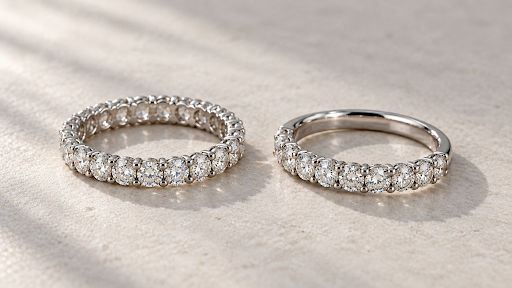
Choosing between a full eternity band and a half eternity band comes down to gemstone coverage, comfort, resizing flexibility, and budget. A full eternity band has gemstones around the entire ring, creating continuous sparkle. A half eternity band features gemstones across the front, leaving a plain metal section underneath.
If you love an uninterrupted line of gemstones, a full eternity band may be your preference. If everyday practicality and possible future resizing matter more, a half eternity band deserves consideration. At Ring Come True, we want you to understand these differences before choosing a ring you'll enjoy wearing.
Full Eternity vs Half Eternity Band at a Glance
Both designs are associated with lasting commitment, although their gemstones are arranged differently.
|
Feature |
Full Eternity Band |
Half Eternity Band |
|
Gemstone coverage |
Entire circumference |
Approximately the upper half |
|
Sparkle |
Visible from every angle |
Concentrated across the front |
|
Comfort |
Settings may contact neighbouring fingers |
Plain underside may feel smoother |
|
Resizing |
Generally difficult or impractical |
May be possible, depending on the design |
|
Price |
Usually higher for comparable specifications |
Usually lower for comparable specifications |
|
Maintenance |
More gemstone settings to inspect |
Fewer settings to inspect |
|
Ring rotation |
Consistent appearance |
Plain section may become visible |
A full eternity band isn't inherently less comfortable or durable than a half eternity band. Much depends on the gemstone size, setting style, and how well the ring fits.
What Makes the Two Designs Different?
Full Eternity Bands: Continuous Sparkle
A full eternity band features a complete circle of gemstones, with no plain section underneath the finger.
This creates a consistent appearance even when the ring rotates. Whether you're looking at the top, side or underside, the gemstone pattern continues around the band.
The uninterrupted design also gives full eternity rings their traditional symbolism of everlasting commitment.
They're often chosen as wedding bands, anniversary gifts, or milestone jewellery. However, having stones around the entire circumference introduces practical considerations, particularly when it comes to sizing and maintenance.
Half Eternity Bands: A Plain Underside
A half eternity band features gemstones across the visible front portion, with plain metal completing the rest of the ring.
This gives you much of the sparkle associated with an eternity band without placing gemstones underneath your finger.
The plain section can make certain designs more comfortable for regular wear and may provide space for future resizing.
However, the exact coverage varies. Some half eternity bands have stones extending slightly further around the sides, while others concentrate them across the centre.
If the ring rotates, part of the plain section may also become visible.
How Much Does Comfort Matter for Everyday Wear?
The practical differences matter most when you plan to wear the band regularly.
Typing, holding a steering wheel, carrying shopping bags, and gripping objects can all place pressure on your jewellery.
With a full eternity band, gemstones and their settings extend into areas that frequently contact other surfaces. Depending on the design, larger stones or prominent prongs may feel noticeable against neighbouring fingers.
A half eternity band has fewer settings underneath the finger, which may provide a smoother contact surface.
However, gemstone coverage is only one consideration. Bandwidth and setting height matter too.
Consider these details:
-
Bandwidth: Wider bands can feel tighter than narrow rings of the same nominal size.
-
Setting height: Raised gemstones may protrude further from the finger.
-
Metal edges: Rounded edges may feel different from flat or sharply defined profiles.
-
Gemstone size: Larger stones can create a bulkier setting.
-
Ring fit: A loose band may rotate, while an overly tight band can cause discomfort.
If the ring rotates frequently, feels tight when you close your hand, or presses against neighbouring fingers, its fit or setting profile may not be right for you. Trying different widths and gemstone sizes can help you identify a more comfortable combination.
Can You Resize an Eternity Band?
Resizing is one of the strongest practical reasons to consider a half eternity design.
Traditional ring resizing involves adding or removing metal from the band. With gemstones extending around the entire circumference, this process becomes much more complicated.
Why Full Eternity Bands Are Difficult to Resize
A full eternity band has little or no plain metal available for a conventional size adjustment.
Changing its circumference can affect gemstone spacing, alignment, and setting security.
As a result, resizing may require substantial reconstruction, and some designs cannot be safely resized at all.
This makes accurate sizing particularly important before purchasing a full eternity band.
Are Half Eternity Bands Easier to Resize?
Generally, yes, but not always.
Because a half eternity band has a plain section underneath, a jeweller may have room to add or remove metal without disturbing the gemstone arrangement.
However, the extent of any adjustment depends on the setting, band structure, nd available metal.
Our guide to whether a ring can be resized explains these limitations in more detail, including why some gemstone-set designs require extra care.
Although a plain metal section can make resizing possible in some half-eternity designs, this doesn't mean every partially stone-set band can be altered.
At Ring Come True, our published policy states that eternity bands cannot be resized. If you order the wrong size, the ring would need to be remade at your expense. We recommend confirming your ring size before ordering and contacting us if you're unsure about the fit.
Is a Half Eternity Band More Affordable?
A half eternity band generally uses fewer stones, but that doesn't always translate into a lower price.
With a full eternity design, gemstones cover the entire circumference. This typically requires additional materials and setting work.
Several factors influence the final cost:
-
Gemstone type: Moissanite, lab-grown diamonds, and other gemstones have different prices.
-
Stone size and total carat weight: Larger stones or greater total gemstone weight can increase the cost.
-
Precious metal: Gold purity and platinum selection influence pricing.
-
Setting design: Intricate arrangements may require more detailed manufacturing work.
-
Ring size: A larger full eternity band may require more gemstones to maintain continuous coverage.
For example, a half eternity band with larger diamonds could cost more than a full eternity band with much smaller stones.
To make a meaningful comparison, look at the entire specification rather than gemstone coverage alone.
Does the Setting Affect Durability?
Yes. The setting influences how exposed the gemstones are to everyday contact.
A full eternity band has settings positioned around the entire ring, including the underside, where they may experience more frequent contact.
This doesn't necessarily make it fragile, but it does make setting design particularly important.
Common options include prong, channel and bezel settings.
Prong settings use small metal claws to secure individual gemstones. Channel settings hold stones between continuous metal walls, while bezel settings surround gemstones with metal rims.
The GIA's guide to ring settings explains how these arrangements influence a ring's appearance and gemstone protection.
The appropriate choice depends on the design, stone dimensions and intended use.
Precious metal also influences maintenance. Gold alloys and platinum behave differently under everyday wear, as outlined in the GIA's comparison of ring metals.
Regardless of which band you choose, inspect the settings periodically and seek professional advice if you notice movement, damage or worn prongs.
Will an Eternity Band Sit Comfortably Beside Your Engagement Ring?
If you plan to wear an eternity band alongside an engagement ring, gemstone coverage is only part of the decision.
The profile of your engagement ring matters just as much.
For example, a raised engagement ring setting may leave enough space for a straight eternity band to sit close against it. A lower setting may cause the two rings to touch or leave a visible gap.
You'll also want to consider whether the bands' settings rub against each other.
When trying an eternity band beside your engagement ring, look at where the two settings meet. Check whether exposed prongs or gemstone edges touch, whether the bands sit comfortably together and whether either ring twists when you move your hand.
When comparing moissanite and lab-grown diamond wedding bands, pay attention to width, setting height and how the band would sit beside your existing ring.
A visible gap isn't necessarily a problem. The more important consideration is whether the rings can be worn together without uncomfortable pressure or unnecessary contact between their settings.
What If You Want More Than Half Coverage?
A three-quarter eternity band offers another possibility.
Rather than choosing gemstones around the entire circumference or only across the front, this design covers approximately three-quarters of the ring.
It allows the gemstone pattern to extend further around the sides while leaving a smaller plain section underneath.
This can provide a similar appearance to a full eternity band from many viewing angles.
However, three-quarter coverage doesn't guarantee that the ring can be resized. That depends on how much uninterrupted metal remains and the construction of the setting.
At Ring Come True, our Double Shared Prong eternity band is available with full or three-quarter gemstone coverage. Its listed precious metal options include 14K and 18K gold in different colours, as well as platinum.
If you're considering either style, explore our moissanite and lab-grown diamond eternity band collection to compare available designs and find the combination that appeals to you.
Which Band Should You Choose?
Think about where, how often and alongside which other rings you'll wear the band.
A full eternity band may be the better fit if you value uninterrupted gemstone coverage, prefer a consistent appearance when the ring rotates and have carefully confirmed your ring size.
A half eternity band may suit you better if you prefer a plain underside, want potentially greater resizing flexibility or would rather keep gemstones away from areas that frequently contact other surfaces.
Neither option guarantees comfort, durability or future resizing. Those depend on the specific ring.
Before making your decision, consider how often you'll wear the band, whether you'll stack it with other jewellery and how important future alterations might be.
Continuous gemstone coverage is worth choosing when its appearance matters more to you than the added sizing and maintenance limitations. The better choice is the one whose design, fit and practical considerations work for you.