Flush Fit Engagement Ring - Should It Sit With Your Wedding Band?
A wedding band does not have to sit perfectly flush with your engagement ring. A flush-fit engagement ring can look clean, balanced, and easy to wear. But a small gap can also look beautiful, especially when the engagement ring has a low setting, halo, side stones, an elongated centre stone or a more detailed basket.
At Ring Come True, we think the best ring stack is the one that feels comfortable, intentional and true to your style. Flush can be lovely. A gap can be lovely. A curved band can also be the detail that makes the full stack feel balanced. This guide explains what a flush fit means, when it matters, and how to choose a wedding band that works with your engagement ring’s shape and side profile.
Quick Answer: Does Your Ring Need to Sit Flush?
No. Your engagement ring does not need to sit flush with your wedding band.
A flush fit is a style preference, not a requirement. If you like a seamless, close stack, it is worth planning for. If you prefer a lower engagement ring setting or a more detailed design, a small gap may be completely fine. What matters most is that the rings look intentional together and feel comfortable on your hand.
What Is a Flush Fit Engagement Ring?
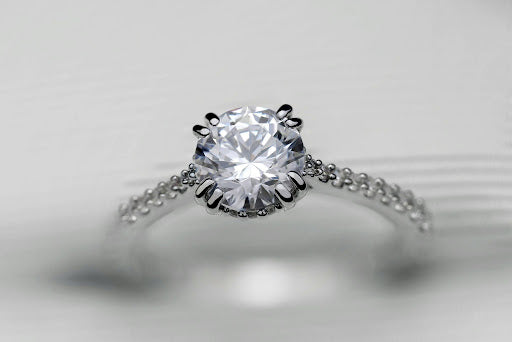
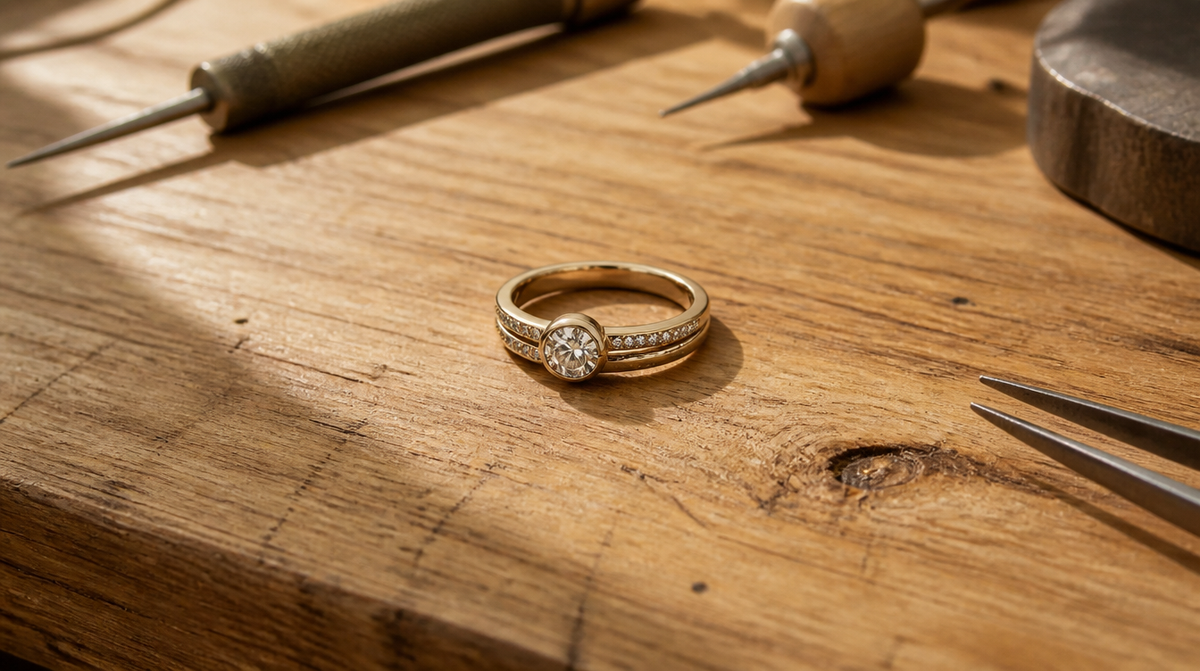
A flush fit engagement ring is designed so that a straight wedding band can sit closely beside it, with little to no visible space between the two rings. This usually depends on the side profile of the engagement ring. If the centre stone is raised enough, or the basket leaves space beside the band, a straight wedding band may slide neatly into place.
If the centre stone sits lower, or if the setting extends beyond the shank, a straight band may touch the engagement ring before it can sit close. That is when a gap appears. For basic ring stacking order, our guide on how to wear an engagement ring and wedding bandis a helpful next read.
Why Some Engagement Rings Do Not Sit Flush
A ring stack is usually shaped by structure, not just style.
The setting height, basket shape, centre stone size and under-gallery details can all affect how closely a wedding band sits. GIA’s guide to solitaire setting styles explains how different setting types, including prong, cathedral and bezel settings, can change the way a ring is built.
Common reasons a wedding band may not sit flush include:
-
A low basket under the centre stone
-
A halo or hidden halo
-
Side stones on the engagement ring band
-
A bezel that extends beyond the shank
-
Decorative gallery details
-
A larger or elongated centre stone
-
A thicker wedding band profile
None of these details is wrong. They simply mean the wedding band needs to be chosen with the engagement ring’s shape and side profile in mind.
Flush Fit, Small Gap or Curved Band?
There are a few ways your engagement ring and wedding band can sit together. One is not automatically better than the others.
|
Option |
What It Means |
Best For |
Good to Know |
|
Flush fit |
Rings sit closely together |
Clean, classic stacks |
Usually needs enough setting height |
|
Small gap |
Rings sit slightly apart |
Low or detailed settings |
Can look intentional when balanced |
|
Curved band |
The band curves around the ring |
Halos, ovals and low baskets |
The shape should be matched carefully |
|
Open band |
The band has a small opening |
More distinctive stacks |
Fit and comfort matter |
|
Spacer band |
Thin band sits between rings |
Separating two rings |
Can reduce rubbing and add a layered look |
A small gap is not a design failure. In some stacks, it gives each ring a clearer outline and helps the overall pairing feel more balanced.
When a Flush Fit Engagement Ring Makes Sense
A flush fit engagement ring may be the right choice if you already know you want a straight wedding band.
It can also suit people who like tidy, symmetrical jewellery. If you plan to wear your engagement ring and wedding band together every day, a close fit can make the set feel neat and unified.
A flush fit may suit you if:
-
You like a clean, aligned stack
-
You prefer straight wedding bands
-
You want both rings to read as one set
-
You want less visible space between the rings
-
You may add anniversary or stacking bands later
If this look matters to you, it is best to think about the wedding band before finalizing the engagement ring. A small setting detail can make a big difference later.
When a Gap Is Completely Fine
A gap can look beautiful when the engagement ring has a low-profile or more detailed setting.
Some people prefer lower settings because the centre stone sits closer to the finger. Others love halos, side stones or sculptural galleries that naturally create space between the engagement ring and wedding band.
A gap may be worth embracing if:
-
You love the engagement ring exactly as it is
-
You prefer a lower setting
-
You want a curved or decorative wedding band
-
You like a more relaxed stack
-
You want each ring to stand out as its own piece
A gap usually works best when the spacing looks balanced rather than accidental. If the rings feel considered together, they do not need to touch.
How Centre Stone Shape Can Affect the Fit
The centre stone shape can influence how a wedding band sits beside the engagement ring.
Round stones can be easier to pair with straight bands, depending on the setting. Oval, pear, marquise and emerald cuts may need more thought because their length can affect the basket and side profile.
Halo designs can also change the fit. Even if the ring looks slim from the top, the halo or hidden gallery may stop a straight band from sitting close.
If you have an oval centre stone, our guide to wedding bands for oval engagement rings explains more pairing options.
How to Choose a Wedding Band That Works
When we compare ring stacks, the side view often tells us more than the top view. Basket height, band width, stone placement and whether the rings touch can all change how the stack feels once it is worn.
Start With the Side View
The top view tells you how the ring looks. The side view tells you how it stacks.
Look at the basket, gallery, prongs and any details under the centre stone. These are the parts that usually decide whether a straight wedding band can sit flush.
Try More Than One Band Shape
A plain straight band, pavé band, curved band and open band can all change the look of the same engagement ring.
This is where the wedding band choice matters just as much as the engagement ring setting. A raised setting may work beautifully with a straight band, while a low basket, halo or elongated centre stone may look better with a curved or contoured band.
Trying a few shapes side by side can help you see whether a flush fit, a small gap or a shaped stack feels most natural on your hand.
Think About Everyday Wear
Your ring stack should look beautiful, but it also needs to feel comfortable.
If two rings rub against each other, the metal may show wear over time. If a band presses into the engagement ring’s setting, it may not sit comfortably. GIA’s guide to protecting a diamond engagement ring also notes that setting details can help protect vulnerable areas of a ring, which is worth considering for everyday wear
Ask Clear Questions Before Ordering
Before choosing a ring or wedding band, ask what the metal is, what the stones are, whether the band is straight or curved, and whether it is designed to sit close to a specific engagement ring style.
The Federal Trade Commission’s jewellery guidance explains why clear descriptions matter when advertising diamonds, gemstones and pearls.
Simple questions now can help you avoid wondering later why the rings do not sit the way you expected.
Questions to Ask Before Choosing Your Band
Before deciding whether a flush fit engagement ring is important to you, ask:
-
Do I want a straight wedding band?
-
Do I mind a small visible gap?
-
Will I wear both rings together every day?
-
Do I prefer a low or raised engagement ring?
-
Does my centre stone shape affect the band fit?
-
Would a curved or contoured band look better?
-
Do I want room for future stacking bands?
-
Do the rings feel comfortable side by side?
These questions help you choose for your real life, not just for a close-up photo.
Before You Choose: Picture the Full Stack
A flush fit engagement ring is not the only polished option. What matters is how the engagement ring and wedding band look together from the top, from the side and on your hand.
If you love a close, seamless look, a straight band and a higher setting may be the right direction. If your engagement ring has a low basket, halo, oval stone or detailed gallery, a curved or contoured band may create a more natural fit.
Before deciding, compare a few band styles beside the engagement ring:
-
A plain, straight band for a clean finish
-
A pavé band for added sparkle
-
A curved band for a closer fit around the centre stone
-
A spacer band if the rings need a little separation
-
A contoured band if the setting shape needs more support
This is where the wedding band becomes part of the design, not just the second ring. Explore our wedding bands to compare different shapes, widths and details that can help your stack feel balanced.
If you are unsure whether your ring should sit flush, book a consultation with Ring Come True. We can help you explore the side profile, band shape and fit options before you choose a pairing that feels right for your stack.