How to Choose the Right Moissanite Cut for Your Ring
Choosing a moissanite ring is about more than selecting a shape or size. The cut of the stone plays the biggest role in how your ring looks in real life. It determines how light travels through the stone, how bright it appears, and whether it looks crisp or flat in everyday lighting.
Two moissanite stones can look similar on paper, yet appear very different once worn. One may reflect light beautifully from every angle, while another can seem dull under normal indoor light. That difference almost always comes down to cut quality.
Selecting the right cut helps ensure your ring looks just as striking in daily wear as it does in professional photos.
Step 1: Understand What “Cut” Really Means
One of the most common misunderstandings when shopping for a ring is the difference between cut and shape.
Shape refers to the outline of the stone, such as round, oval, cushion, emerald, or pear.
Cut refers to how the stone’s facets are arranged and how precisely those facets reflect light.
Cut controls sparkle, brightness, and movement. It determines whether light is returned to your eye or lost inside the stone. It is also the biggest factor in whether a moissanite looks premium or underwhelming.
A well-cut moissanite should:
• Look bright even in soft indoor lighting
• Reflect light evenly across the surface
• Avoid dark patches or a dull centre
• Appear crisp rather than glassy
Studio lighting can make almost any stone look impressive. Cut quality is what keeps a stone looking beautiful in everyday conditions like daylight, office lighting, and evening restaurants.
Step 2: Decide What Kind of Sparkle You Prefer
Moissanite is known for its sparkle, but not everyone enjoys the same type of light performance.
Some people prefer clean, white brilliance that feels classic and subtle. Others enjoy the colourful flashes of light that moissanite can show, particularly in sunlight or bright indoor environments.
Neither style is better than the other. The right choice is the one that feels most appealing when you imagine wearing the ring every day.
Step 3: Brilliant Cuts vs Step Cuts
This decision shapes the entire personality of the ring.
Brilliant Cuts
Brilliant cuts are designed to maximise sparkle. They use many small facets that break light into fast, lively flashes.
These cuts suit:
• People who love noticeable sparkle
• Traditional engagement ring styles
• Anyone who wants the stone to feel bright and energetic
Brilliant-style shapes include round, oval, cushion, radiant, pear, and marquise.
Step Cuts
Step cuts use long, straight facets that create broad flashes of light rather than glittery sparkle. The result is calm, polished, and refined.
These cuts suit:
• Minimalist style
• Clean, architectural lines
Emerald and asscher are the most popular step cuts. They shine in a quieter, mirror-like way that feels elegant and modern.
Step 4: Choosing the Best Cut for Each Shape
Shape is personal. Cut is performance. The best result comes from pairing the shape you love with a cut that performs well in everyday lighting.
Round Brilliant
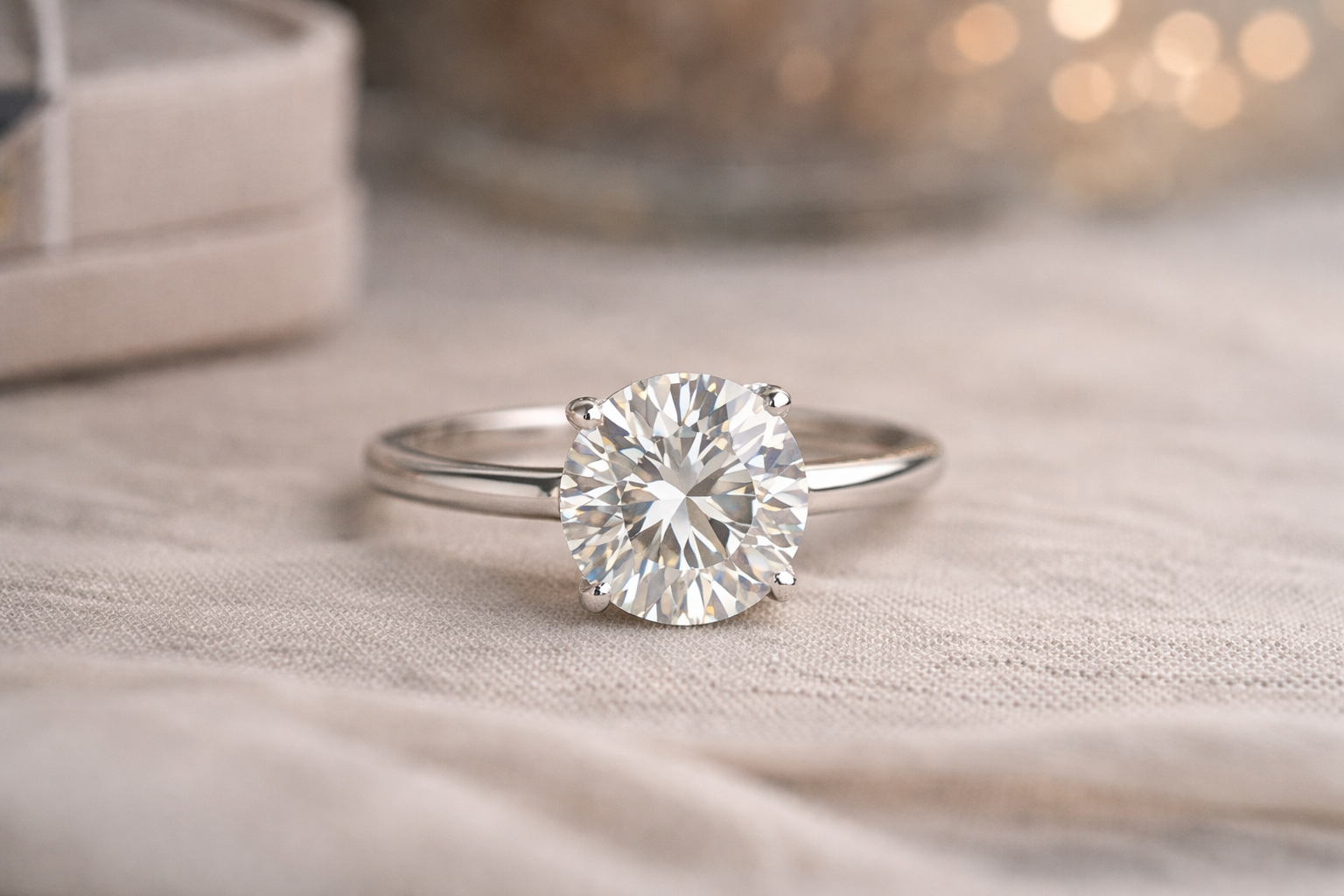
Round brilliant is one of the most reliable shapes for light performance. Its symmetry allows light to reflect evenly, creating consistent brightness.
It suits nearly every setting style, from solitaires to halos and bezels. It is also one of the easiest cuts to judge visually because its light return is predictable and balanced.
Oval
Oval cuts are valued for their graceful shape and finger-lengthening effect. They often appear larger than round stones of similar weight.
Some oval stones show a shadow across the centre called a bow tie. A slight bow tie can be normal, but it should not dominate the stone.
Oval cuts suit those who want elegance with a soft silhouette.
Cushion
Cushion cuts sit between round and square. They feel timeless and slightly vintage while remaining very wearable.
They work well for anyone who wants a strong sparkle without sharp corners. Cushion cuts also suit both classic and decorative settings.
Radiant
Radiant cuts combine a structured outline with brilliant-style sparkle. They tend to look bright and modern, especially in larger sizes.
They suit people who enjoy clean lines with high brilliance.
Pear and Marquise
Pear and marquise cuts create long, tapered shapes that look distinctive and intentional.
They suit:
• Those who enjoy statement silhouettes
• Anyone who wants a finger-lengthening effect
• Buyers who want something different without losing a timeless feel
These shapes need good symmetry because uneven curves or tips can be noticeable once set.
Emerald and Asscher
Emerald and asscher cuts are defined by clean lines and large open facets. These cuts highlight clarity and proportion more than sparkle.
They suit:
• Minimalist tastes
• Modern and vintage-inspired styles
Because the facets act like windows, precision matters greatly for these shapes.
Step 5: Choose Size Using Millimetres
Moissanite is often listed using diamond-equivalent carat terms, but millimetres provide a clearer picture of how large the stone will appear.
Millimetres describe the face-up dimensions, meaning what you actually see on the finger.
Different shapes spread their weight differently:
• Oval often looks larger than round
• Marquise looks longer and more dramatic
• Emerald can appear slimmer depending on its proportions
A practical sizing approach:
-
Choose the shape first
-
Compare stones using millimetres
-
Decide how much finger coverage feels comfortable
-
Match the size to the setting style for balance and wearability
Step 6: Match the Cut to the Setting
The same stone can look very different depending on how it is set. Cut and setting should support each other.
Solitaire Settings
Solitaire settings keep attention on the centre stone. They suit round, oval, cushion, and emerald cuts particularly well.
Halo Settings
Halo settings add visual size and extra sparkle. They pair beautifully with oval, cushion, pear, and round cuts.
Bezel Settings
Bezel settings frame the stone with metal, offering extra protection and a clean silhouette. They work especially well for emerald, round, and oval shapes and are practical for everyday wear.
Step 7: Think About Everyday Wear
Moissanite is suitable for daily wear, but shape features still matter.
Rounded shapes are the most practical. Pointed tips and sharp corners benefit from additional protection.
Shape wearability overview:
|
Shape |
Wearability |
Notes |
|
Round |
Excellent |
No corners |
|
Oval |
Excellent |
Balanced |
|
Cushion |
Excellent |
Soft edges |
|
Radiant |
Very good |
Protect corners |
|
Emerald |
Very good |
Secure setting helpful |
|
Pear |
Good |
Protect tip |
|
Marquise |
Good |
Protect both tips |
Even a well-cut stone can lose sparkle if residue builds up from soap or lotion. Gentle cleaning helps maintain brightness and clarity.
Step 8: How to Judge Cut Quality in Photos and Videos
Cut quality is easiest to evaluate when a stone is shown in motion.
Look for:
• Even brightness across the surface
• A crisp facet pattern rather than a hazy look
• Minimal dark areas when tilted slightly
• Videos filmed in natural lighting
• Rotation views showing the stone from multiple angles
Avoid relying on a single still image, especially one taken under strong studio lights.
Final Thoughts
Choosing the right moissanite cut is about how the ring looks in real life, how it fits your lifestyle, and how it feels every time you glance at your hand.
There is no universal best cut. The right choice is the one that suits your taste, your daily routine, and your sense of style. Shop our Moissanite collection today to find your perfect ring.